The surgery is done. The crutches are in the closet. And the bar is sitting in the rack, waiting. If you're a lifter after ACL surgery, the first question is almost always the same: when can I squat, deadlift, and jump again?
You want a date. I get it. But in my clinic, the date on the calendar matters less than what your leg can prove. In this guide I'll walk you through the phases of getting your lifts back, what has to be true before each one returns, the tests I use to decide, and why 9 months keeps showing up in the research. Your surgeon's protocol always comes first. This is how we build on it.
The short answer
Most lifters start some leg work in the first weeks after ACL surgery, inside their surgeon's protocol. Heavy squats, heavy deadlifts, and jumping come back in steps, and each step is earned with a strength or movement test, not a date. In one study of athletes after ACL reconstruction, each month they waited to return to hard sport, up to 9 months, cut the reinjury rate by about half [1]. Time matters, but time alone is not enough.
Why the date on the calendar is not enough
Two athletes can be 6 months out from the same surgery and be in completely different places. One has a quad that's nearly as strong as the other side. The other still can't trust the leg on a step-down. Same date, very different knees.
The research backs this up:
Waiting helps, up to a point. A study that followed 100 athletes for two years found that each month they delayed their return to hard pivoting sport cut the reinjury rate by 51%, until 9 months after surgery. After 9 months, waiting longer didn't lower the risk any further. The authors put it plainly: time alone is not enough to decide [1].
Quad strength is the number that matters most. In that same study, every 1% gain in quad strength symmetry was linked with about 3% fewer reinjuries. Athletes whose surgical-side quad was under 90% of the other side reinjured at 33%. Those over 90% reinjured at 12.5% [1].
Passing the tests matters. In 158 professional athletes, those who returned without passing all six discharge tests had four times the risk of tearing the new graft [2].
Most people go back weaker than they think. A review of 37 studies found the surgical-side quad was about 23% weaker at 6 months and still about 14% weaker at 12 months [3].
These were small studies, and most of the athletes played field sports, not barbell sports. So I treat the exact numbers as a guide, not a promise. But the direction is clear: strength and testing decide readiness, and the calendar sets the floor.
The phases, lift by lift
Your timeline depends on your graft type, any other repair (like a meniscus repair), and your surgeon's protocol. If your surgeon's rules differ from this table, follow your surgeon. The months below are typical ranges, not deadlines. Each phase starts when the gate is passed, not when the date arrives.
Phase | What you can usually train | What has to be true first |
|---|
Early (first weeks) | Quad sets, straight leg raises, a leg press in a short range, upper body, and the other leg | Your knee straightens all the way and the swelling is under control |
Building (about months 2 to 4) | Goblet squats to a box, split squats, light Romanian deadlifts, step-ups, blood flow restriction work | No swelling the day after a session, and a smooth squat with even weight on both legs |
Loading (about months 4 to 6) | Barbell squats and trap bar deadlifts that build in load, then conventional pulls, and a return to running | Full knee extension, near-full bend, little to no swelling, and quad strength over 80% of the other side |
Power (about months 6 to 9) | Jumps and landings, box jumps, Olympic lift catches, sled pushes and lunges at volume | Hop tests and quad strength at 90% or more of the other side |
Full sport (9 months and on) | Competition, max-effort lifting, CrossFit and HYROX at full intensity | The full return-to-sport test battery is passed |
A few notes from the guidelines behind that table. The Aspetar clinical practice guideline on ACL rehab says a leg press in a half-squat range can start around 3 weeks after surgery with a hamstring graft, and leg extensions in a limited range (from 90 to 45 degrees of knee bend) can start from week 4 [4]. Its suggested criteria before running include full knee extension, about 95% of normal knee bend, no more than a trace of swelling, quad strength over 80% of the other side, and pain-free single-leg hopping [4].
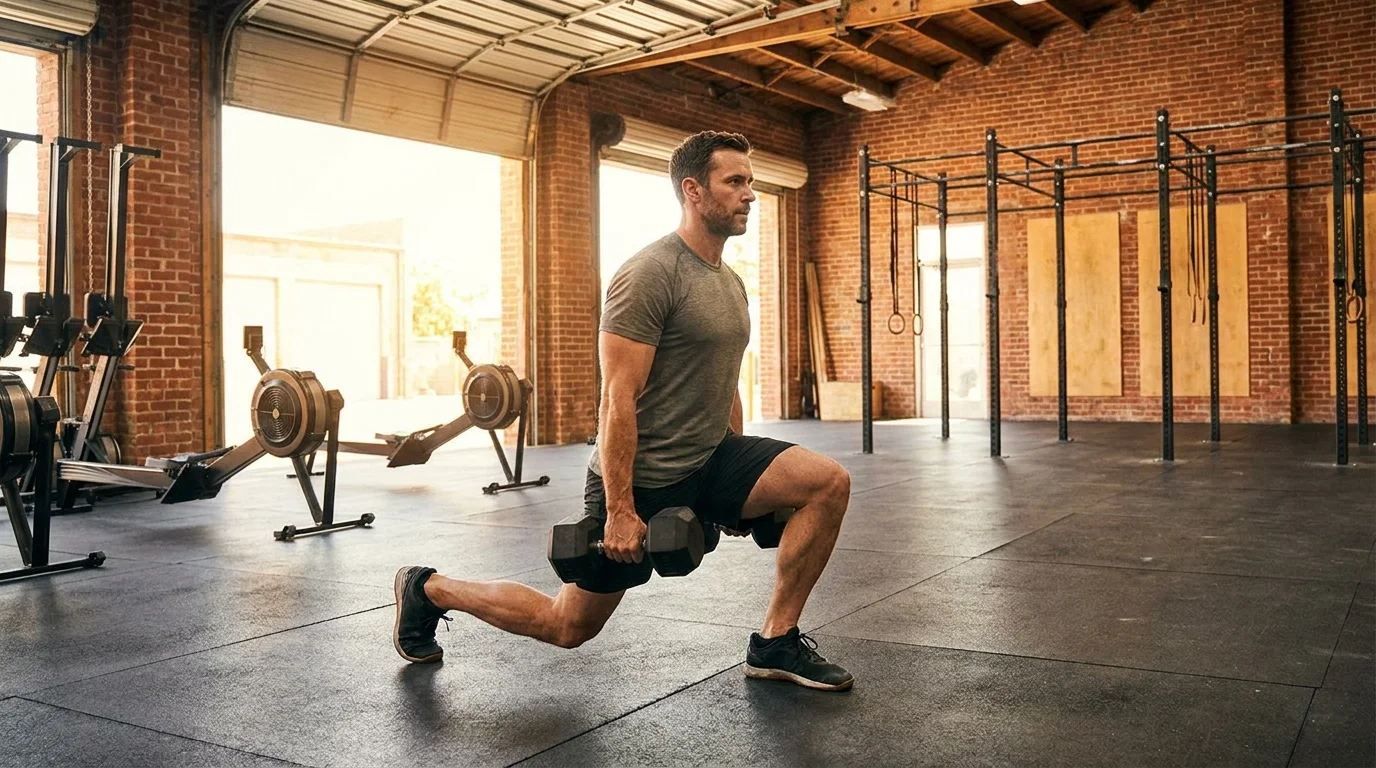
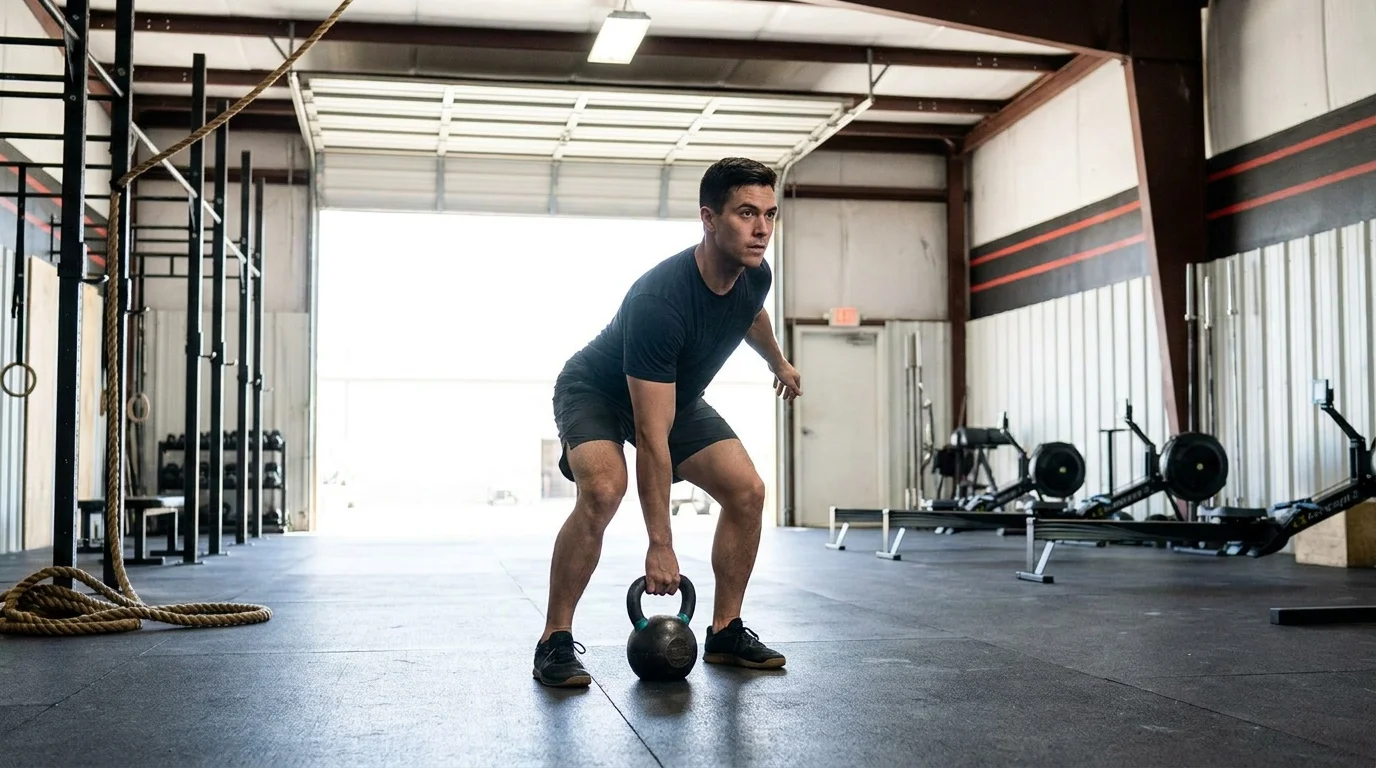
Notice that the heavy lifts come back before jumping. A slow, controlled squat asks a lot less of a new graft than a landing does. That's good news for lifters: the bar usually comes back sooner than the box jump. If your knee aches on squats later on, my guide to knee pain from squatting covers the usual causes.
The tests I use before each lift comes back
The first thing I want to know is how strong the surgical-side quad is compared with the other side. That one number tells me more than the date. From there, I build the full picture:
Quad and hamstring strength, side to side. This is the test I care about most [1].
Hop tests. A single hop for distance, a triple hop, a crossover hop, and a timed 6-meter hop, each compared with the other leg.
A knee function survey. How the knee feels in daily life and in training.
How you move. I watch your squat, your step-down, and your landing. A leg can pass a strength test and still shift your weight to the good side.
My pass line for a return to hard sport is 90% of the other leg or better on every test, which matches the decision rules in the Delaware-Oslo study [1]. For high-demand pivoting sports, the Aspetar guideline asks for full symmetry in quad and hamstring strength [4]. This is how we decide return to sport in our post-surgical rehab program: with strength and symmetry testing, not with a date.
How I build the quad back
The quad is where most lifters fall behind after ACL surgery, so it's where we spend the most effort.
Progressive strength training is the main tool. We start inside your protocol's limits and add load every week the knee allows. The goal is not "pain-free." The goal is a quad that matches the other side.
Lower the weight slowly, too. The Aspetar guideline suggests combining the lifting phase and the lowering phase of each rep, rather than training only one of them [4]. A slow 3-second lowering on a split squat is one of my favorite tools.
Leg extensions are back in the toolbox. In a limited range and with the right load, they let us target the quad directly, combined with squats and presses [4].
Blood flow restriction lets you train hard with light weight. When heavy loading is still off the table, blood flow restriction training lets us build the quad with about 20 to 40% of your max. A 2022 review of six trials found bigger strength gains with it than with the same light training alone, and no extra graft laxity in the two trials that measured it [5]. The authors call it promising and ask for more trials, so I use it as one tool, not the whole plan.
Train the rest of you the whole time. Upper body, the other leg, your core, and conditioning on a bike or rower all stay in the plan. One knee doesn't take your whole training life away.
Mistakes that set lifters back
I see these every month:
Chasing a date. "My buddy squatted at 4 months" isn't a plan. His knee isn't your knee.
Hiding behind two-leg lifts. Your squat number can look great while the good leg does most of the work. Single-leg work tells the truth.
Ignoring the next-day swelling. If the knee is puffier the morning after a session, the dose was too high. Pull it back for a few days.
Skipping the boring work. The leg extensions and slow step-downs are what close the gap.
Jumping into a full group class too soon. A CrossFit or HYROX class at full volume asks for jumping and fast direction changes. Scale it until you've passed the power phase. Our CrossFit physical therapy and powerlifting physical therapy programs plan that return around your training.
When to call your surgeon
Call your surgeon if you notice:
The knee giving way, or a new pop with pain
A big increase in swelling that doesn't settle
Calf pain, warmth, or swelling in the lower leg
Fever, or redness or drainage at the incisions
A knee that locks and won't straighten
If I think you need your surgeon, I'll tell you, and I'll work with your surgeon's protocol the whole way.
Frequently asked questions
How soon can I squat after ACL surgery?
Many people do a leg press in a short range and box squats in the first weeks, inside their surgeon's protocol [4]. A loaded barbell squat usually comes back later, once your knee straightens fully, the swelling stays down after sessions, and your squat is even on both legs. Your surgeon's rules come first.
When can I deadlift after ACL reconstruction?
Light hip hinges like a Romanian deadlift often come back during the building phase. Heavy deadlifts build in during the loading phase. Your graft type matters. If your new ACL came from your hamstring, the hamstring needs time to heal too, so we load it more gradually.
Is 9 months after ACL surgery the rule?
It's the point where the drop in reinjury risk stopped in one study [1]. That makes it a reasonable floor for a return to hard pivoting sport. It isn't a pass. You still need to pass the tests.
Do I need a referral for physical therapy in Iowa?
Iowa allows direct access, so you can see a physical therapist without a referral. After surgery, we follow your surgeon's protocol and keep your surgeon in the loop. You can read more about how we treat hip and knee pain here in Waukee.
The bottom line
After ACL surgery, your lifts come back in steps, and each step is earned. Get the knee straight and the swelling down. Build the quad with heavy, progressive work, slow lowering, and blood flow restriction when heavy loading is off the table. Then pass the tests before the jumps and the full-intensity training come back. The calendar sets the floor. Your strength decides the rest.
If you're in Waukee or the Des Moines area and working back from ACL surgery, book a free discovery call and let's build the plan that gets you back under the bar.
Medical disclaimer: This article is for educational purposes and is not personal medical advice. Follow your surgeon's protocol, and consult a healthcare provider about your specific situation.
References
Grindem H, Snyder-Mackler L, Moksnes H, Engebretsen L, Risberg MA. Simple decision rules can reduce reinjury risk by 84% after ACL reconstruction: the Delaware-Oslo ACL cohort study. British Journal of Sports Medicine. 2016;50(13):804-808. https://pmc.ncbi.nlm.nih.gov/articles/PMC4912389
Kyritsis P, Bahr R, Landreau P, Miladi R, Witvrouw E. Likelihood of ACL graft rupture: not meeting six clinical discharge criteria before return to sport is associated with a four times greater risk of rupture. British Journal of Sports Medicine. 2016;50(15):946-951. https://bjsm.bmj.com/content/50/15/946
Lepley LK. Deficits in quadriceps strength and patient-oriented outcomes at return to activity after ACL reconstruction: a review of the current literature. Sports Health. 2015;7(3):231-238. https://pmc.ncbi.nlm.nih.gov/articles/PMC4482305
Aspetar. Clinical practice guideline on rehabilitation after anterior cruciate ligament reconstruction. https://www.aspetar.com/acl-recommendations
Koc BB, Truyens A, Heymans MJLF, Jansen EJP, Schotanus MGM. Effect of low-load blood flow restriction training after anterior cruciate ligament reconstruction: a systematic review. International Journal of Sports Physical Therapy. 2022;17(3):334-346. https://doi.org/10.26603/001c.33151