The ache starts at the base of your skull, wraps up the back of your head, and sometimes settles behind one eye. It shows up after a heavy day of pulls, a long session at the desk, or a night on a bad pillow. Turn your head toward the sore side and it gets worse. If that sounds familiar, your neck pain radiating to your head may not be a head problem at all. It may be starting in your neck.
That kind of headache has a name: cervicogenic headache. In this guide I'll show you how to tell it apart from a migraine or a tension headache, why lifters and desk workers get it, what I check in the first visit, the exercises that have the best research behind them, and the signs that mean you need a doctor today, not a PT.
The short answer
Neck pain that radiates into your head is often a cervicogenic headache. It is a headache caused by a problem in the joints, discs, or soft tissue of the upper neck [1]. It usually stays on one side, starts in the neck and spreads forward over the head, and gets worse with certain neck movements or when you press on the sore spots in your neck [1]. Physical therapy with hands-on treatment and specific neck exercises has reduced how often and how hard these headaches hit, and in one large trial the results held for a full year [2].
Why does neck pain radiate to your head?
The nerves from the top three segments of your neck meet the nerve that carries feeling from your face and head in the same relay station in your brainstem. Your brain can't always tell which wire the signal came in on. So a stiff, irritated joint at the top of your neck can feel like pain behind your eye, at your temple, or across your forehead. The international headache classification describes this overlap between the upper neck and the head as well understood [1].
That's also why the pain usually travels from back to front. It starts at the base of the skull and moves up and over, not the other way around.
Is it a cervicogenic headache, a migraine, or a tension headache?
The three can overlap, and some people have more than one. These are the patterns I look for. The international criteria list the first three as the features that tend to separate a cervicogenic headache from a migraine or a tension headache [1].
| Sign |
Cervicogenic headache |
Migraine |
Tension-type headache |
| Side |
Usually the same side every time |
Can switch sides |
Both sides, like a band |
| Where it starts |
Neck and base of skull, then spreads forward |
Often the temple or behind the eye |
Forehead, temples, or all around |
| What sets it off |
Neck movement, sustained postures, pressure on the neck |
Triggers like sleep, stress, food, or hormones, often with no neck link |
Stress, fatigue, long days |
| Neck motion |
Stiff, often on one side |
Usually normal |
Usually normal |
| Nausea, light and sound sensitivity |
Can happen, usually milder |
Common and strong |
Uncommon |
Two quick self-checks: does the headache always sit on the same side, and can you make it start by holding a position or pressing on one spot at the top of your neck? If both answers are yes, the neck is worth a closer look.
Why lifters and desk workers get it
I see two groups with this most often in the clinic, and plenty of people are in both.
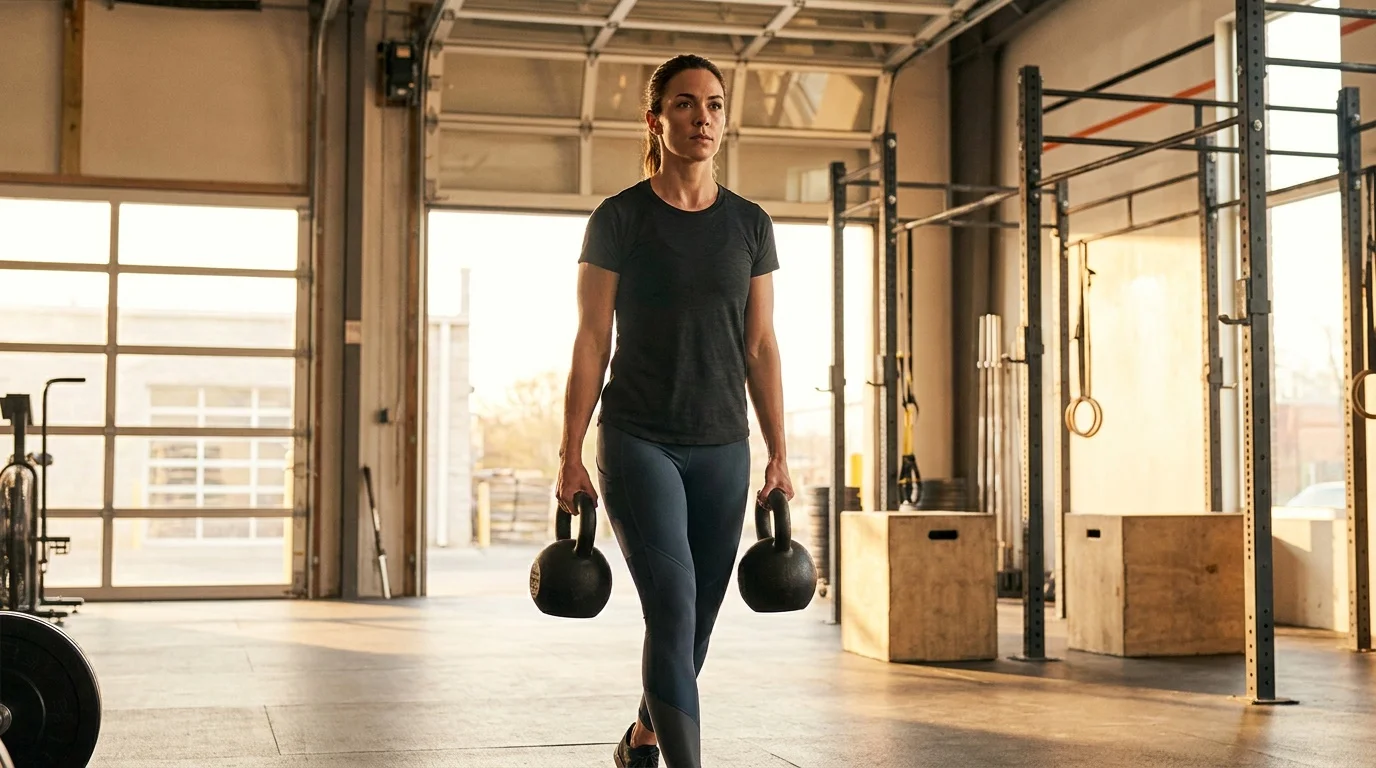
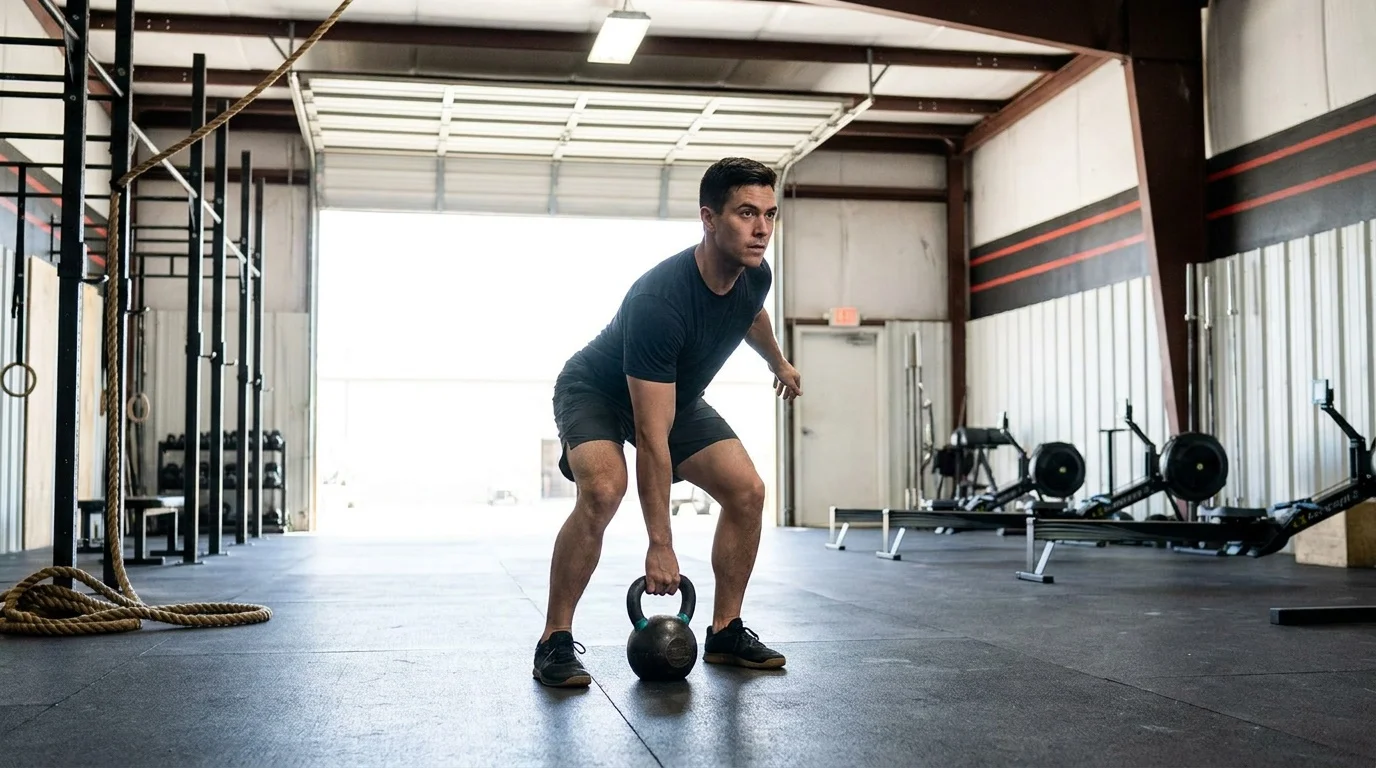
Lifters. Heavy pulls, shrugs, and carries ask the muscles at the top of your neck to work hard, and many people crank their chin up to look at the mirror on every deadlift. Add a hard-braced breath on top of that and the upper neck takes a lot of load. A few habits keep showing up in my lifters with these headaches:
- Looking up hard at the top of a deadlift or a heavy row, instead of keeping the neck in line with the spine
- Heavy shrugs or farmer's carries with the head pushed forward
- A big jump in pulling volume, like a new program that doubles rows and pull-ups
- Sleeping on the stomach with the head turned to one side
Desk workers. Long hours with the head pushed forward toward a screen put steady load on the same joints. Then the same person goes to the gym after work and asks those tissues for more.
None of this means lifting is bad for your neck. Load is how tissue gets stronger. The goal is to find the dose and the positions your neck can handle right now, then build from there.
The headaches you should never train through
Most headaches during or after training are not dangerous. But a few patterns need a doctor before they need a PT.
The headache classification lists a "weight-lifter's headache" under primary exercise headache. It also says that the first time a headache like this happens, a doctor must rule out bleeding in the brain, a tear in a neck artery, and a narrowing of the blood vessels in the brain [3].
Stop and get medical care right away if you have:
- A sudden, severe headache that hits its peak within seconds, often called the worst headache of your life
- A headache that starts during a heavy lift or a hard effort for the first time
- Neck pain with dizziness, double vision, trouble speaking or swallowing, numbness in the face, or weakness in an arm or leg
- A headache after a fall, a car accident, or a hit to the head
- Fever, a stiff neck you can't bend forward, or a rash
- A new headache pattern after age 50, or a headache that keeps getting worse over days or weeks
A cervicogenic headache builds with neck positions and stays fairly predictable. If yours doesn't fit that, see a doctor first.
What I check in the first visit
The first thing I do in the eval is listen to how the headache behaves. Where does it start? Which side? What makes it worse, and what makes it better? Then I look at the neck itself.
- The flexion-rotation test. I tuck your chin all the way down to lock out the lower neck, then turn your head to each side. That focuses the movement on the joint between your first two neck bones. In one study, this test picked out people whose headaches came from that joint 91% of the time and correctly ruled out people without it 90% of the time [4]. It was a small study, so I use it as one piece of the picture, not the whole answer.
- Hands-on checks of the upper neck. I press on each segment at the top of your neck to find the one that reproduces your familiar headache. If I can bring on your usual headache, that's a strong clue.
- Deep neck flexor endurance. These small muscles at the front of your neck hold your head in line. In many people with this headache, they tire out fast.
- Your lifts. If a deadlift, row, or carry brings on the headache, I want to see it. Often the fix is a change in head position, not a break from the bar.
You can read more about how I evaluate an athlete on day one.
How physical therapy treats a cervicogenic headache
The best-known trial on this headache followed 200 people for a year. They got hands-on treatment to the neck, a specific exercise program, both, or neither. Both the hands-on treatment and the exercise program reduced how often and how hard the headaches hit, and those gains held at 12 months [2]. The combination wasn't significantly better than either one alone, but about 10% more people got relief with both [2].
A 2022 review of 20 trials came to a similar answer: hands-on treatment and exercise may reduce headache intensity, frequency, and disability in the short and long term [5]. The authors rated much of the evidence as low quality and asked for better trials, so I won't promise you a timeline. I will tell you this is one of the better-studied headaches a PT treats.
What that looks like with me:
- Hands-on treatment to the upper neck to restore motion at the stiff segment and calm the pain down
- Deep neck flexor training, starting with small chin nods and building to longer holds
- Shoulder blade and upper back strength, because a strong upper back gives the neck a stable base
- A training plan, not a training ban. We change the lifts that bring on the headache and keep the rest. You keep training while we build your neck back up.
- Dry needling when it fits, for tight, tender muscles at the base of the skull and the top of the shoulders
Three exercises to start with
Start easy. These should feel like work, not pain. If one brings on your headache, stop that one and let us look at it.
- Chin nods. Lie on your back with your knees bent. Without lifting your head, gently nod as if you are saying "yes" and slide the back of your head up the floor a little. Hold 10 seconds. Do 10 reps, once or twice a day.
- Prone Y and T raises. Lie face down on a bench or the floor with your forehead resting on a folded towel. Keep your chin tucked. Raise your arms in a Y, then in a T, with your thumbs up. Do 2 sets of 10 of each, slow and controlled.
- Neutral-neck rows. Do any row you like, but keep your eyes on the floor a few feet in front of you, not on the mirror. Use a weight you can move with your neck still. Do 3 sets of 10 to 12.
On your heavy pulls, try the same rule. Pick a spot on the floor about 6 to 10 feet in front of you and keep your eyes there through the whole rep.
When to get help
Book an evaluation if:
- The headaches keep coming back for more than a few weeks
- The pain stays on one side and you can bring it on with neck movement or a held position
- Your neck motion is stiff or painful, especially when you turn to one side
- The headaches are getting in the way of your training, your work, or your sleep
Not sure if it's time? My guide on when an athlete should see a physical therapist walks through it. You can also read how we treat neck pain and headaches here in Waukee.
Frequently asked questions
Can a stiff neck cause a headache behind the eye?
Yes. Nerves from the top of the neck and nerves from the face and head meet in the same place in the brainstem, so pain from the upper neck can feel like it is behind the eye or at the temple [1]. It is usually on the same side as the stiff part of the neck.
Should I stop lifting if I get neck headaches?
Usually not. Change the lifts and positions that bring on the headache, and keep the rest of your training. The exception is a sudden, severe headache during a lift, or any of the red flags above. Stop and see a doctor first for those.
How long does it take to fix a cervicogenic headache?
It varies. In the largest trial, people did six weeks of treatment, and the improvement held at 12 months [2]. Many people notice a change in the first few weeks, but you need to keep the strength work going to keep the results.
Will a massage gun or foam roller fix it?
They can ease tight muscles for a while, and that's fine. But the best research supports hands-on treatment to the neck joints and specific strength work [2, 5], so use the massage gun as a short-term help, not the whole plan.
The bottom line
Neck pain that radiates into your head is often a cervicogenic headache: one-sided, starting in the neck, and brought on by neck movement or held positions. Rule out the red flags first. Then the best-supported plan is hands-on treatment plus specific neck and upper-back strength work, with smart changes to your lifts so you can keep training.
If headaches are getting in the way of your training, book a free discovery call and let's find where yours is coming from and get you back under the bar.
Medical disclaimer: This article is for educational purposes and is not personal medical advice. Consult a healthcare provider about your specific situation, and get emergency care for a sudden, severe headache. Individual results may vary.
References
- Headache Classification Committee of the International Headache Society. 11.2.1 Cervicogenic headache. The International Classification of Headache Disorders, 3rd edition (ICHD-3). https://ichd-3.org/11-headache-or-facial-pain-attributed-to-disorder-of-the-cranium-neck-eyes-ears-nose-sinuses-teeth-mouth-or-other-facial-or-cervical-structure/11-2-headache-attributed-to-disorder-of-the-neck/11-2-1-cervicogenic-headache/
- Jull G, Trott P, Potter H, et al. A randomized controlled trial of exercise and manipulative therapy for cervicogenic headache. Spine. 2002;27(17):1835-1843. https://doi.org/10.1097/00007632-200209010-00004
- Headache Classification Committee of the International Headache Society. 4.2 Primary exercise headache. The International Classification of Headache Disorders, 3rd edition (ICHD-3). https://ichd-3.org/other-primary-headache-disorders/4-2-primary-exercise-headache/
- Ogince M, Hall T, Robinson K, Blackmore AM. The diagnostic validity of the cervical flexion-rotation test in C1/2-related cervicogenic headache. Manual Therapy. 2007;12(3):256-262. https://doi.org/10.1016/j.math.2006.06.016
- Bini P, Hohenschurz-Schmidt D, Masullo V, Pitt D, Draper-Rodi J. The effectiveness of manual and exercise therapy on headache intensity and frequency among patients with cervicogenic headache: a systematic review and meta-analysis. Chiropractic & Manual Therapies. 2022;30:49. https://doi.org/10.1186/s12998-022-00459-9