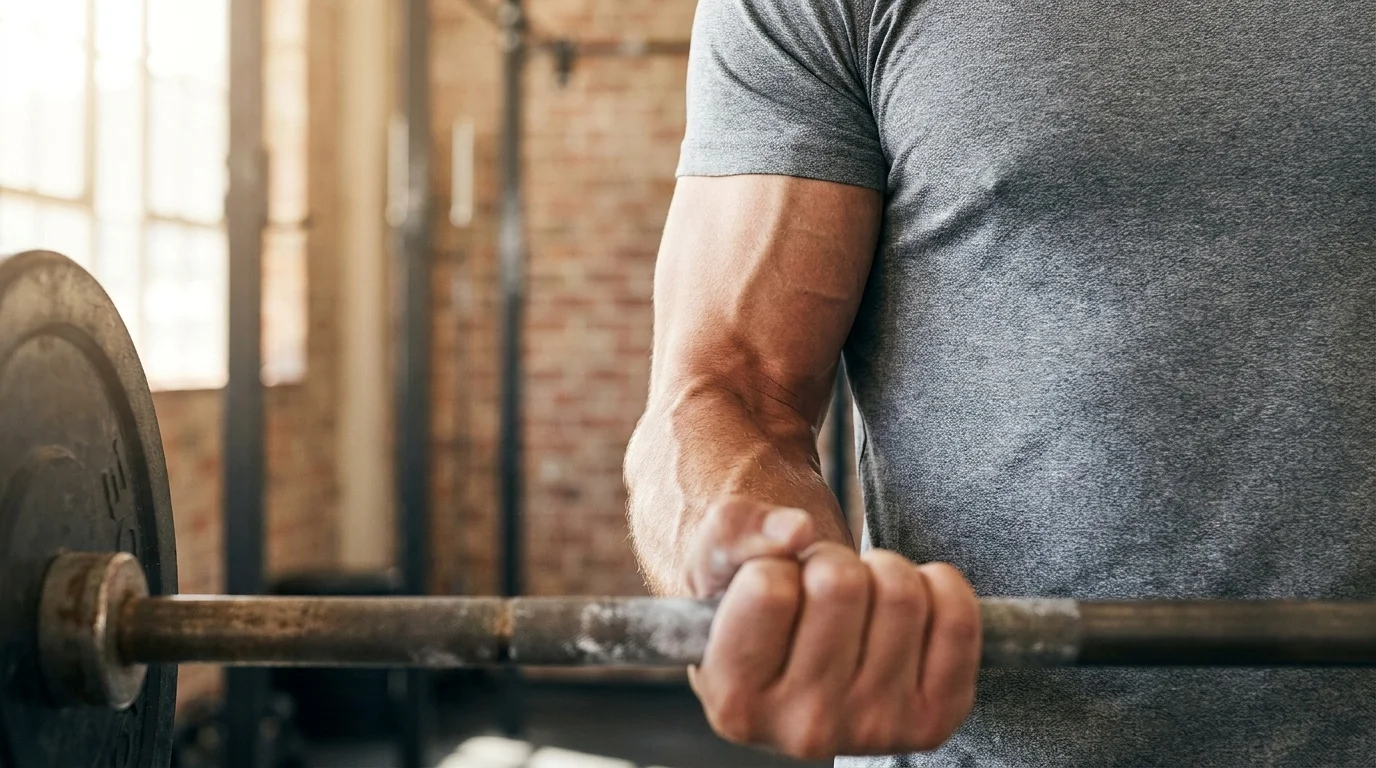
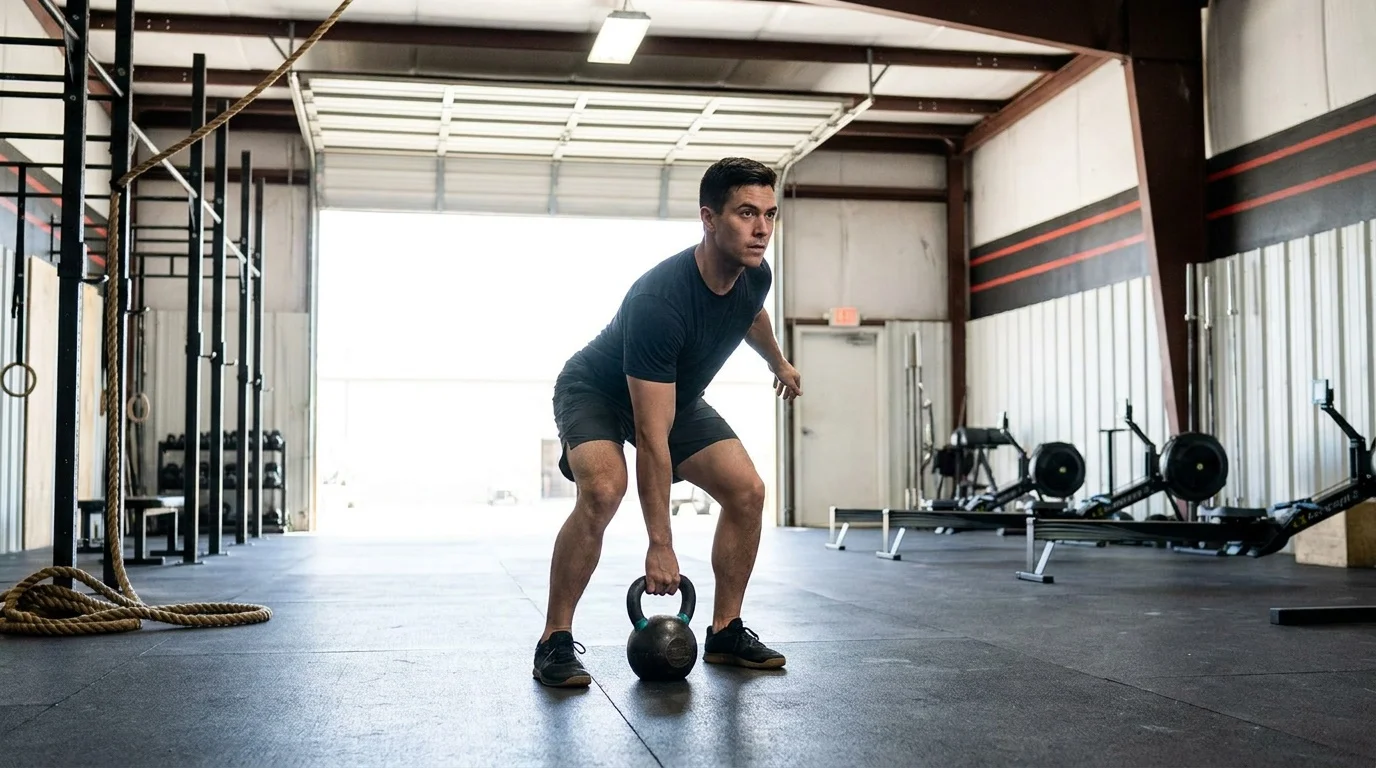
You are mid-curl or three reps into a heavy set of chin-ups, and there it is: a nagging pain at the front of your shoulder or right in the crease of your elbow. It warms up for a few sets, then aches the next morning, and now you are wondering whether you are one bad rep away from tearing something. I hear this one constantly from lifters. Your biceps is involved in almost everything you do in the gym, so when its tendon gets cranky, it feels like it touches every session. Here is the good news: biceps tendonitis is almost always an overload problem, not a tear, and overload problems respond to smart loading. In this article I will show you how to tell which biceps tendon is actually the issue, and exactly how to keep training while it settles.
What is biceps tendonitis, and why do lifters get it?
Biceps tendonitis, known more precisely as biceps tendinopathy, is irritation and overload of one of the tendons that attaches your biceps muscle. The key thing most people miss is that the biceps has two ends, and they live in two very different places:
The long head of the biceps runs up over the front of your shoulder and anchors inside the joint. This is the one that gets blamed for front-of-the-shoulder pain, and it is often tangled up with other shoulder issues like rotator cuff irritation or impingement.
The distal biceps tendon attaches down at your elbow. This is the one that flares from heavy curling, chin-ups, and hard pulling.
The mechanism is the same at both ends: overuse. The tendon got loaded faster than it adapted. For lifters that usually means a jump in pulling volume, a new curl-heavy block, a grip-intensive pulling day, or a lot of pressing with a shoulder that sits forward. The tissue is not broken. It is behind on capacity.
Shoulder or elbow: how do I tell which biceps tendon is the problem?
This is the question that changes your whole plan, so get specific about where it actually hurts. Here is how the two present:
Front-of-the-shoulder pain (long head of the biceps). A tender, often pinpoint spot at the very front of the shoulder that you can sometimes press on and reproduce. It gets worse with overhead pressing, bench, and reaching backward, and it frequently travels with other shoulder symptoms (Journal of Orthopaedic & Sports Physical Therapy, 2009). If your pain is really a pressing-and-shoulder story, my guide on bench press shoulder pain digs into it.
Inside-the-elbow pain (distal biceps). A deep ache in the crease at the front of the elbow that lights up with curls, chin-ups, and heavy supinated or mixed-grip pulls. It usually warms up during a session and aches afterward.
One quick sorting tip: if the pain is on the bony bumps on the sides of your elbow rather than the front crease, that is more likely tendon pain from the forearm muscles, not the biceps. That is lifter's elbow, and it has its own fix.
Which lifts trigger it?
Your biceps does two jobs: it bends your elbow and it turns your forearm palm-up (supination). It is under the most tension when both happen together under load, which is exactly what a curl is, and exactly what your arm does gripping a bar in an underhand or mixed grip. That is why these are the usual suspects:
Heavy or high-volume curls, especially a sudden bump in arm work
Chin-ups and underhand pulldowns
Deadlifts with a supinated or mixed grip
Overhead pressing and bench, which load the long head at the shoulder
Any fast spike in pulling or pressing volume inside a short window
Notice the pattern. It is rarely a single "bad" exercise. It is almost always a dose that climbed faster than the tendon could keep up.
Do I need to stop lifting?
Almost never completely. Tendons adapt to the load you give them, and shutting everything down tends to leave the tissue less capable than when you started, so the pain comes right back the moment you return. The better move is relative rest: keep training, but adjust the dose so you stay under your pain threshold while the tendon rebuilds. When an international panel of sports physical therapists reached consensus on managing biceps tendinopathy, the framework they landed on was to unload the tendon first and then progressively reload it, not to rest it (International Journal of Sports Physical Therapy, 2022).
In plain terms: total rest is a short-term painkiller with a long-term cost. Smart loading is the actual treatment.
How do you actually fix biceps tendonitis?
You manage the load instead of removing it, and you rebuild the tendon's capacity in a predictable order. Here is the progression I use with lifters:
Calm it with isometrics. Steady holds, like a mid-range curl hold against a band or a fixed bar, can take the edge off tendon pain and let you keep training around it. This is my go-to on sore days.
Modify, do not stop. Drop the load, slow the tempo, or shrink the range enough to bring pain down to a low, tolerable level, then keep training there. You hold onto the movement pattern and the habit.
Add eccentrics. Slow, controlled lowering (the down phase of a curl) is a well-supported way to load a cranky biceps tendon. In one case report, a heavy athlete with distal biceps tendinosis was rehabbed back to full loading primarily with eccentric training (International Journal of Sports Physical Therapy, 2012).
Rebuild with heavy slow resistance. Once the pain is settled, slow and heavy strength work over several weeks is where the lasting tolerance comes from. This is the part people skip, and it is the part that keeps it from coming back.
Fix the inputs around it. For front-of-shoulder cases, cleaning up how your shoulder blade and rotator cuff work often takes strain off the long head so it can settle.
The whole approach is matched to how irritable the tendon is that week. More pain means less load and more isometrics. Less pain means we push the strength work.
Does dry needling or anything else help?
It can, as a tool alongside the loading, not instead of it. For a biceps tendon that is guarding and painful, dry needling can quiet things down enough that you tolerate your rehab loads better. I will also look at grip choices, curl technique, and your weekly pulling and pressing volume, because those are often the real driver. The needle is a helper. The load is the fix. That load-first philosophy is the same one behind everything we do for barbell athletes.
When is it more than tendonitis?
Most biceps pain in lifters is a manageable tendon issue. But a few signs point to something that needs eyes on it sooner rather than later:
A sudden pop or sharp tearing sensation during a heavy lift
Bruising in the upper arm or elbow
A visible bulge or a change in the shape of your biceps (sometimes called a "Popeye" deformity)
Sudden, obvious weakness bending the elbow or turning the forearm
Those can signal a partial or full tendon tear rather than tendonitis (American Academy of Orthopaedic Surgeons). If that is you, do not try to train through it. Get it assessed.
How long does biceps tendonitis take to heal?
With smart loading, most lifters feel a real change within a few weeks, and a well-behaved case often settles over four to eight weeks. A stubborn one that has been ignored for months takes longer, because the tendon has more capacity to rebuild. The single biggest factor is not time, it is whether you keep loading it correctly instead of bouncing between "rest until it feels fine" and "go back to full send." Consistent, progressive load is what shortens the timeline.
Frequently asked questions
Can I still curl with biceps tendonitis? Usually yes, in a modified form. Lighter load, a slower lowering phase, and a range that stays under your pain threshold often let you keep curling while the tendon settles.
Is biceps tendonitis the same as a biceps tear? No. Tendonitis is irritation and overload of the tendon. A tear is actual damage to the tendon fibers, and it usually comes with a sudden pop, bruising, weakness, or a change in the shape of the muscle.
Should I rest it or keep training? Keep training in a modified way. Complete rest tends to leave the tendon weaker, so the pain returns when you go back. Relative rest with progressive loading is the better path.
Does biceps tendonitis go away on its own? It can quiet down if you back off the trigger, but without rebuilding the tendon's capacity it tends to return the next time you push volume. Loading it is what makes the fix stick.
Why does the front of my shoulder hurt when I bench? The long head of the biceps runs across the front of the shoulder and gets loaded during pressing, so front-of-shoulder pain with bench is often a biceps and shoulder story working together.
The bottom line
Biceps tendonitis is a signal, not a stop sign. In almost every case it is your tendon telling you the load got ahead of its capacity, whether that shows up at the front of your shoulder or in the crease of your elbow. Figure out which end is talking, calm it with isometrics, keep training in a modified form, and rebuild with progressive strength work. If it is not turning around on its own, let's get eyes on it. Book a visit through our contact page and let's get you back to full training for good. That work runs through sports physical therapy in Waukee.
References
This article is for general education and is not a substitute for individual medical advice. Consult a healthcare provider about your specific situation. Individual results may vary.