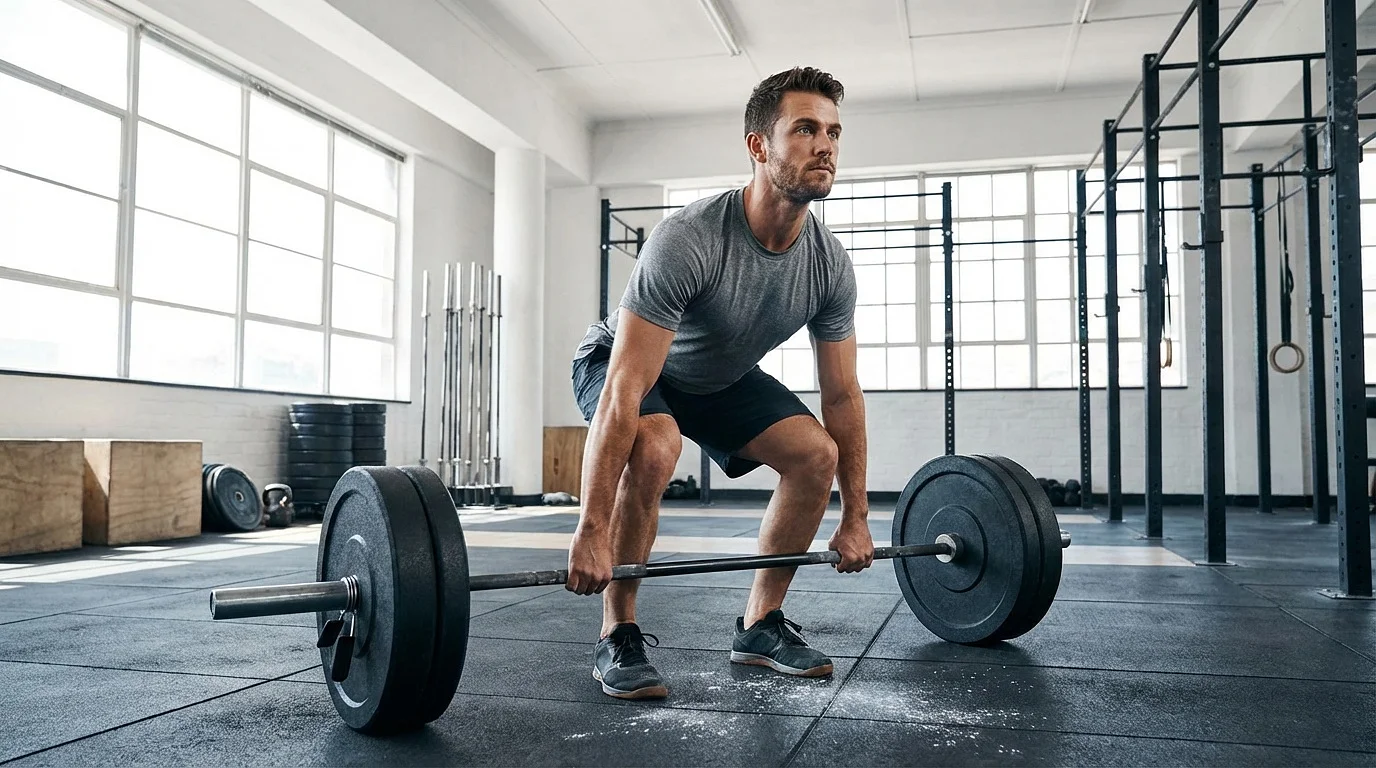
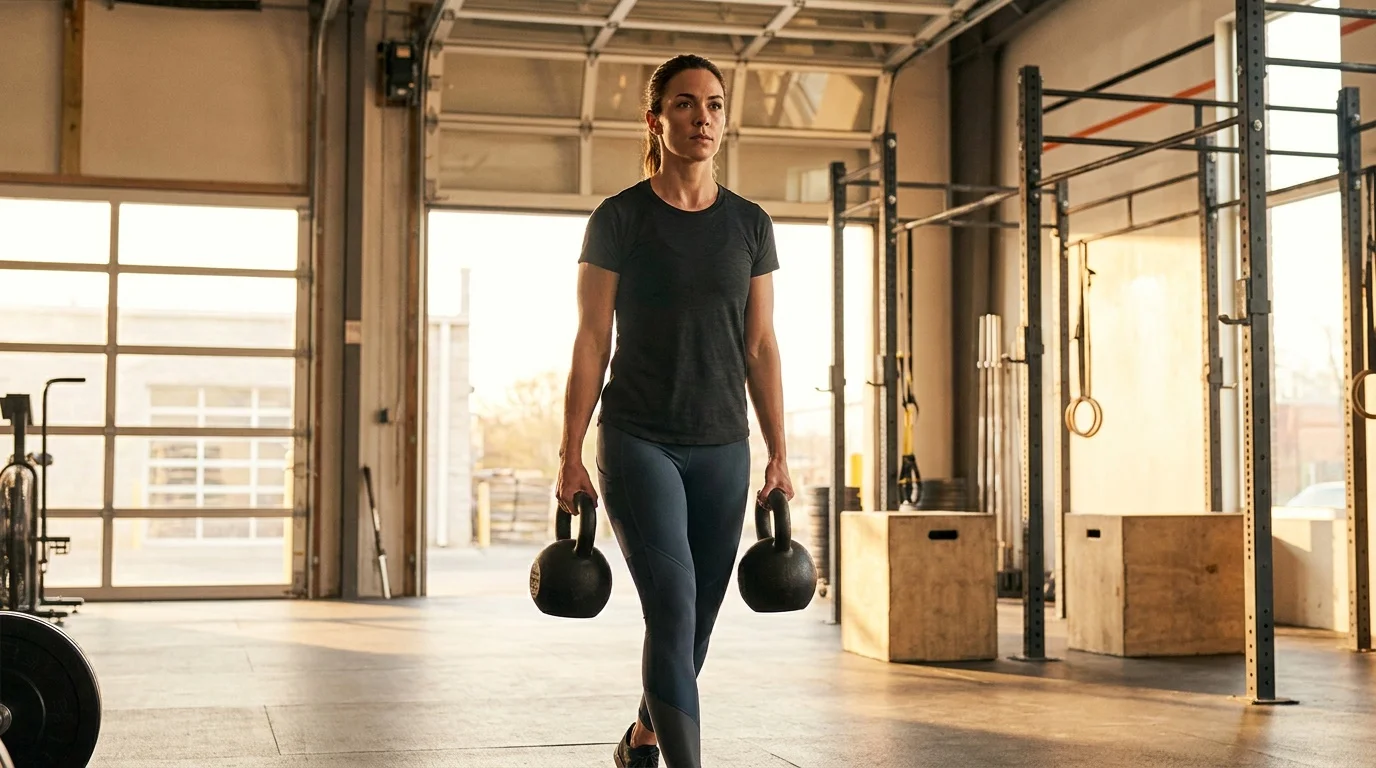
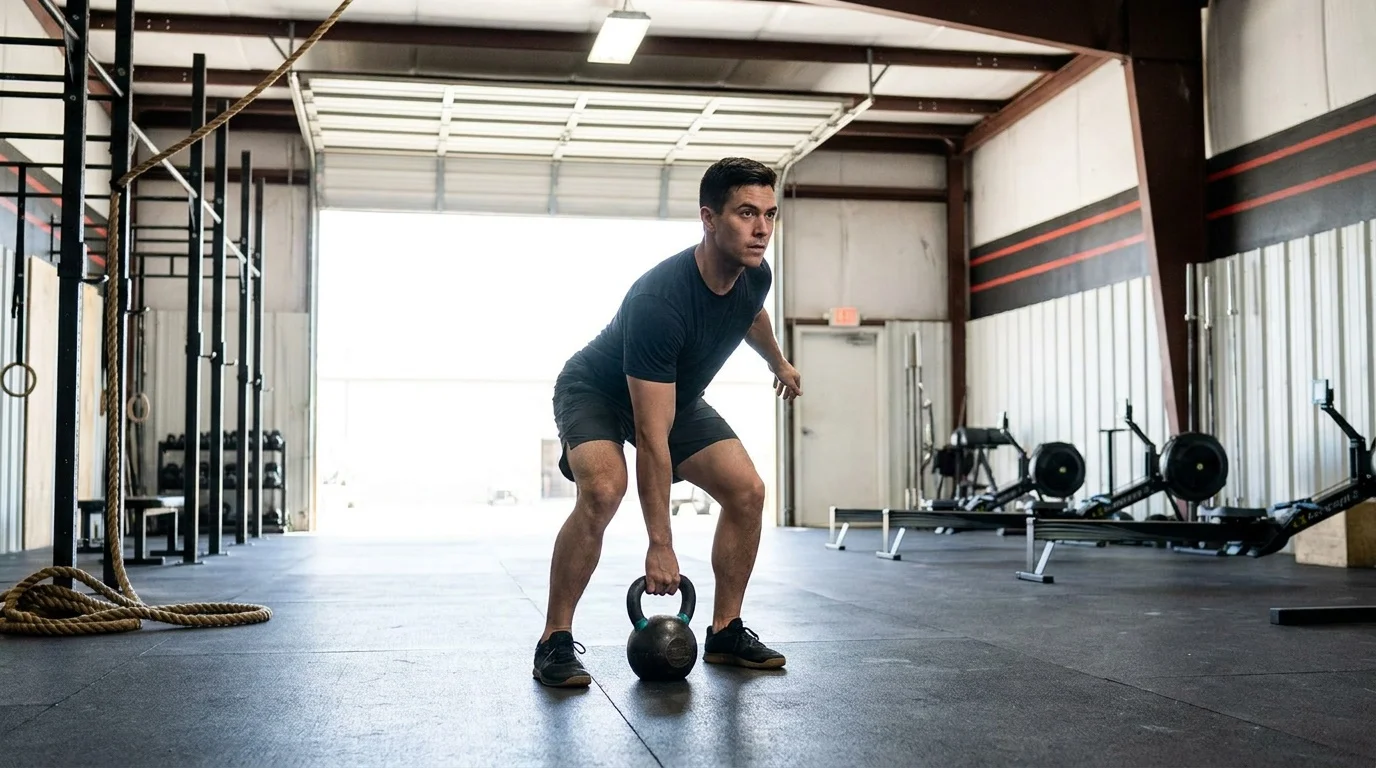
If you lift seriously, you already know your body in a way most people never will. You know the difference between soreness and something wrong, you know what a real program looks like, and you know what your squat is supposed to feel like off the rack. So when something flags, you don't want generic advice. You want powerlifting physical therapy that's built around the bar, built around the load, and built around the training cycle you're already in. The kind of PT that speaks barbell.
This article covers where lifters actually get hurt (and what the research says about it), the rehab principles that keep you training instead of pausing for weeks, and how we approach barbell athletes at Fortitude & Freedom in Waukee.
Where Lifters Actually Get Hurt
The injury picture for strength sports is clearer than it used to be. A recent systematic review of weightlifting and powerlifting injuries put the rate at roughly 1.0 to 4.4 injuries per 1,000 hours of training, with point prevalence around 70 percent across competitive populations [1][2]. That means if you lift long enough, you'll probably deal with something. The useful part is knowing where.
Three regions show up over and over:
Lower back and pelvis. Most common site across both sexes, often tied to deadlift and squat volume.
Shoulder. Bench press, overhead work, and heavy accessory pressing account for most of these.
Elbow and upper arm. Tendinopathy is the typical pattern here, especially with heavy pressing volume.
About 59 percent of reported injuries are acute (something popped or tweaked in a session), and 41 percent are gradual onset (it's been building for weeks) [2]. Strains, tendinopathy, and sprains make up most of the diagnoses. None of this should read as scary. It should read as useful: lifters tend to experience pain in the same two or three spots, which means a PT who knows those spots can act fast.
How We Think About Rehab for Lifters
Training and rehab live on the same spectrum, not in separate buckets [3]. The goal is to keep you training with smart modifications while the irritated tissue settles down, not to rip you out of the gym and give you low level "rehab" exercises.
At Fortitude & Freedom, rehab adjusts four levers so your programming can keep moving:
Intensity. Weight on the bar. We'll often temporarily recalibrate toward RPE (Rate of Perceived Exertion) 5 to 6 on the affected lift, then rebuild to RPE 8 to 8.5 as capacity returns.
Volume. Sets and reps. Pull one down while holding the other steady, so you keep practice without piling on dose.
Velocity. Tempo work, paused reps, and controlled eccentrics. Slowing a movement down can keep the stimulus high while reducing the peak stress the tissue sees.
Range of motion. Block pulls, box squats, pin presses. These aren't concessions, they're bridges. They let you keep loading the pattern while the irritated end range calms down.
The point is that "rest it" is rarely the whole plan. For most lifter cases, the right plan is specific and customized to the individual: modulate one or two of those levers for a few weeks, keep the rest of training intact, and progress back to full lifts on a timeline that actually respects tissue biology.
What Powerlifters Specifically Need from a PT
Powerlifters have a different rehab problem than the general lifter. The competition lifts are the assessment, the load is heavier, the eccentrics are slower, the warm-ups are longer, and there's usually a date on the calendar. Rehab has to respect all of it.
A few things shift for the competitive powerlifter:
- The meet calendar drives the plan. If your meet is twelve weeks out, we build backward from platform day. The rehab block, the loading progression, and the peak get layered together rather than treated as separate problems.
- Equipped vs raw changes the assessment. Wraps, suits, and belts change how load distributes. We screen the lift in the gear you actually compete in, not just raw.
- Accessory work is part of the rehab, not an afterthought. What you do between your competition lifts often determines whether the tissue gets the recovery dose it needs.
- The pain-monitoring model gives you permission to keep training. Pain stays at or below 5 out of 10 during the lift, doesn't worsen between sessions, and returns to baseline by the next day. If those three hold, you keep training. That framework comes from Silbernagel's research on tendinopathy and has held up across loaded rehab populations [6].
Powerlifting physical therapy isn't a separate specialty. It's the same evidence-based loading approach, applied with the specifics of your sport in mind.
The Three Patterns We See Most in Lifters
Low Back and SI Pain
The most common complaint, and often the most misunderstood. In lifters, this is frequently a motor control and load tolerance gap rather than anything structural. Assessment looks at how you hinge under load, how your trunk handles bracing at heavier weights, and whether a specific movement reproduces the symptom. From there, progressive loading combined with targeted manual work and dry needling tends to move the needle quickly. For more context on this region back pain treatment.
Shoulder (Bench and Overhead)
Rotator cuff tendinopathy, AC joint irritation, and long head of the biceps are the usual suspects for benchers and overhead athletes. The rehab route here is almost always loaded ROM work that meets the tissue where it's sensitive, plus dry needling when muscle guarding is limiting the pattern. Most lifters with shoulder issues can keep training with the right modification selection while the primary lift gets rebuilt.
Knee (Squat and Lunge)
Patellar tendon, meniscal irritation, and quad-dominant patterning show up in squatters and HYROX-style athletes. The fix usually isn't rest, it's adjusted loading through the painful range and smarter quad-to-hip distribution. Dry needling can be a helpful adjunct for the soft tissue side of this picture. Deeper read: Dry Needling for Knee Pain.
The Return-to-Lift Timeline
Here's a phrase worth internalizing: "pain-free" and "ready to train" are not the same thing. The gap between clearance and full capacity is usually four to twelve weeks, depending on how long the issue was building and how heavy the pre-injury programming was [4]. Research also consistently shows that ramping load more than about 15 percent per week raises injury risk meaningfully, often in the 21 to 49 percent range [4]. So progression matters.
A typical return-to-lift progression at F&F looks like this:
Phase 1: Symptom modulation and isometrics. Calm the tissue down, load it statically, keep the rest of your program moving.
Phase 2: Loaded variations at reduced intensity. RPE 5 to 6 on the affected lift, with movement variations that let you train the pattern without the aggravating piece.
Phase 3: Competition lifts rebuilding to RPE 8 to 8.5. Back on the primary lift, climbing toward working sets.
Phase 4: Return to programming and meet prep. You're back on your block, volume and intensity matched to the goal on the calendar.
For more on the principles behind staged return to sport, see Return to Sport Physical Therapy.
What a Session Looks Like at Fortitude & Freedom
Being an Orthopaedic Clinical Specialist, and weightlifter myself, shapes how my sessions run:
Real gym environment. Barbell, rack, plates. Rehab happens with the equipment you actually train on, not just a treatment table.
One-on-one hour sessions. Focused time on your programming and your recovery.
Integrated toolkit. Loaded movement assessment, manual therapy, dry needling, and progressive programming under one roof.
Works with your training block. The plan respects the week you're in and the goal on your calendar.
FAQs
Can I keep lifting while I rehab?
Most of the time, yes, with specific modifications. The entire approach is built around keeping you in the gym.
Do I need a referral?
No. Iowa has direct access to physical therapy, so you can book with F&F without seeing a physician first.
How many sessions should I expect?
A typical lifter case runs eight to twelve visits, depending on severity and how long the issue has been building. You'll have a clearer answer after the first assessment.
Is dry needling useful for lifters?
Often, yes. Especially for shoulder, neck, quad, calf, and glute patterns where tissue tone is limiting the movement. It pairs well with loaded rehab rather than replacing it.
What should I bring to the first visit?
Gym clothes you can exercise in, and ideally a summary of your current programming and what movements or ranges are painful.
Ready to Get Back Under the Bar?
Lifters get stronger when rehab respects the bar, the program, and the goal. That's the thesis. If something's limiting you in the gym, and you want it handled by someone who speaks barbell, book a consult and we'll map out how to keep you training through it.
Book a visit at fortitudeandfreedom.com/contact or call (515) 216-0847.
References
Strömbäck E, Aasa U, Gilenstam K, Berglund L. Prevalence and Consequences of Injuries in Powerlifting: A Cross-sectional Study. Orthopaedic Journal of Sports Medicine, 2018. PMC5954586
Injuries in weightlifting and powerlifting: an updated systematic review. 2024. PMC11624822
Development of a comprehensive clinical assessment protocol for low back and hip pain in powerlifters: a feasibility study. 2024. PMC11636030
Keogh JWL, Winwood PW. The Epidemiology of Injuries Across the Weight-Training Sports. Sports Medicine, 2017. PubMed 27328853
Exploring the therapeutic potential of powerlifting exercises: a scoping review on their application and safety. Physiotherapy Theory and Practice, 2025. tandfonline
Silbernagel KG, Thomeé R, Eriksson BI, Karlsson J. Continued sports activity, using a pain-monitoring model, during rehabilitation in patients with Achilles tendinopathy: a randomized controlled study. Am J Sports Med. 2007;35(6):897-906. https://pubmed.ncbi.nlm.nih.gov/17307888/
Aasa B, Berglund L, Michaelson P, Aasa U. Individualized Low-Load Motor Control Exercises and Education Versus a High-Load Lifting Exercise and Education to Improve Activity, Pain Intensity, and Physical Performance in Patients With Low Back Pain: A Randomized Controlled Trial. J Orthop Sports Phys Ther. 2015;45(2):77-85. https://www.jospt.org/doi/10.2519/jospt.2015.5021