If you're dealing with an injury and dreading weeks or months away from training, return to sport physical therapy is built for you. It has one goal: getting you back to full performance as safely and quickly as possible, while keeping you active the whole way.
At Fortitude & Freedom in Waukee, that's the foundation of everything we do. Whether you're a runner, a lifter, a CrossFit athlete, or a weekend warrior who refuses to sit still, our sports physical therapy in Waukee is designed to keep you moving forward, not sitting on the sideline.
What Is Return to Sport Physical Therapy?
Return to sport physical therapy is rehab that ends when you pass objective tests of strength, movement, and sport-specific tasks, not when a set number of weeks has passed. You keep training throughout, and the plan loads the demands of your sport from day one until you are cleared [1][2].
Instead of following a rigid timeline ("rest for six weeks, then try again"), progression is based on what your body can actually do. That means measuring strength, movement quality, and sport-specific function at every stage [1].
The 2016 Consensus Statement from the First World Congress in Sports Physical Therapy established that return to sport should be viewed as a continuum, not a single moment at the end of rehab [2]. In other words, the work you do in physical therapy should mirror the demands of your sport from the very beginning: scaled appropriately, but always progressing toward your goals.
Your progress is determined by objective criteria (strength benchmarks, range of motion, functional testing) rather than an arbitrary number of weeks on the calendar.
Who Is Return to Sport PT For?
Return to sport physical therapy isn't reserved for professional athletes. It's for anyone whose identity and quality of life are tied to staying active:
- Runners training for a half marathon, marathon, or ultra who are dealing with knee pain, shin splints, or Achilles issues
- Lifters and powerlifters working through shoulder, back, or hip pain that's limiting their training
- CrossFit and HYROX athletes managing the high training volume that comes with functional fitness
- Weekend warriors: the parents who play pickup basketball, hit the gym four days a week, or train for obstacle course races
- Youth athletes recovering from sports injuries and needing a structured path back to competition
- Post-surgical patients (meniscus repair, rotator cuff repair, labrum surgery) who want a progressive, sport-specific recovery plan
If your goal is to get back to doing what you love at full capacity, not just "pain-free enough to get through the day," return to sport PT is the right fit.
How Return to Sport PT Works
At Fortitude & Freedom, we use a three-phase framework: Relieve, Restore, Rebuild. Each phase has clear objectives and criteria for progression.
Relieve
The first priority is reducing pain and managing inflammation so you can start moving with confidence. This phase often includes manual therapy, dry needling, and targeted load management. The goal isn't to eliminate all discomfort overnight. It's to create a window where productive training can begin.
Importantly, "relieve" doesn't mean "rest." You'll likely modify your training on day one (adjusting loads, swapping movements, or changing ranges of motion), but you'll still be training.
Restore
Once pain is under control, the focus shifts to rebuilding range of motion, correcting movement patterns, and restoring foundational strength. This is where targeted exercises address the root cause of the issue, not just the symptoms.
For example, if you're recovering from a knee injury, this phase might include progressive loading of your quads, single-leg stability work, and mobility exercises specific to the movements that aggravate your pain.
Rebuild
The final phase is where you bridge the gap between "rehabbed" and "ready." Progressive loading builds toward sport-specific demands. If you're a runner, that means running at race pace. If you're a lifter, that means loading a barbell. Research shows that criterion-based progression, using objective strength testing and functional performance measures, leads to better outcomes than time-based protocols alone [3].
Before clearing you to return to full competition or training, we test objective criteria: strength symmetry, movement quality under load, sport-specific tasks, and psychological readiness. You should feel confident in your body, not just hopeful [4].
What Makes a Good Return to Sport Program
Here's what a strong return to sport program includes, and how we run ours:
- One-on-one sessions. You work directly with your physical therapist for the entire visit, so every rep gets coached and every change gets tested.
- Sport-specific programming. Your rehab plan reflects your sport. A runner's rehab looks different from a powerlifter's rehab, and both look different from a CrossFit athlete's.
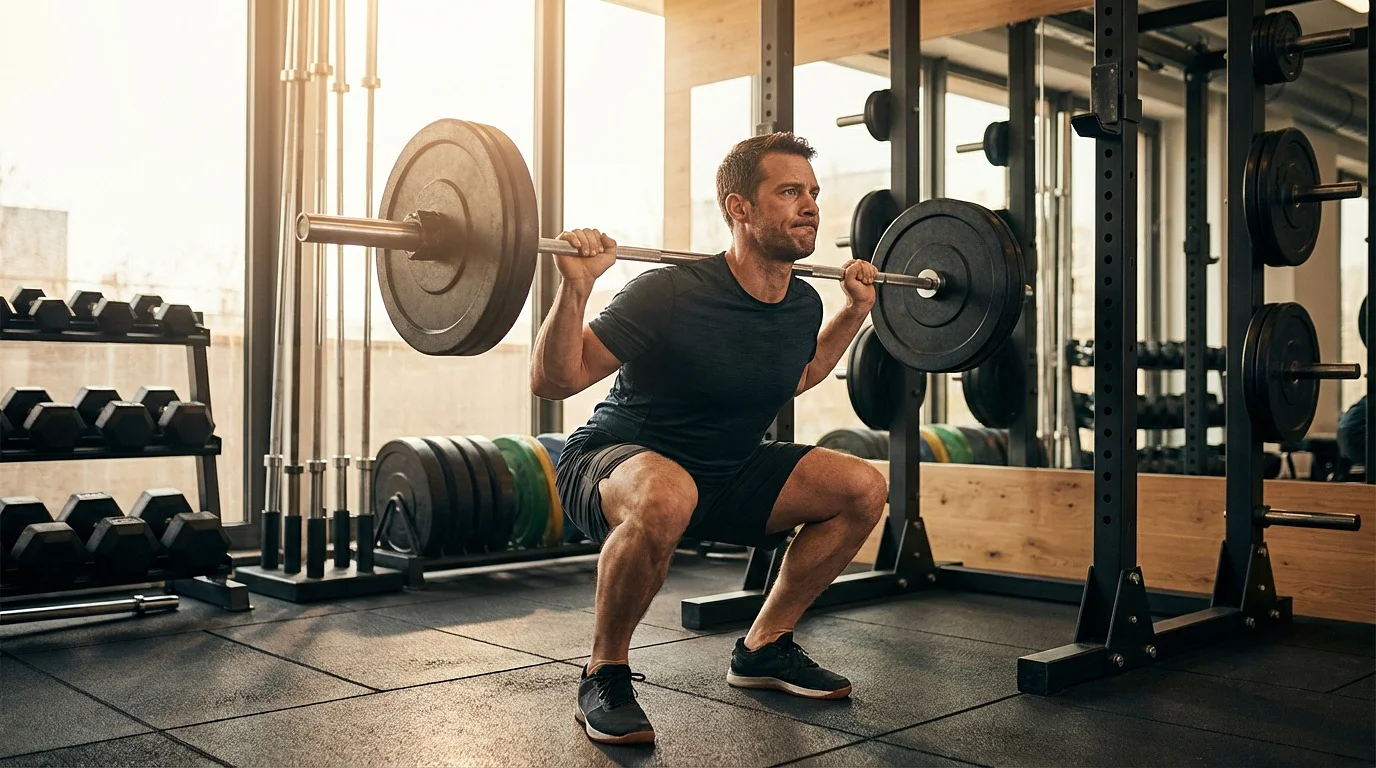
- Real equipment. Barbells, dumbbells, bands, platforms: the tools you actually use in your sport. Rehab that happens in a gym setting, with real training equipment, translates directly to performance.
- Objective testing. Before you're cleared, there are measurable benchmarks, not just "it feels okay." Strength testing, limb symmetry indexes, and functional movement screens give you (and your PT) confidence that you're ready.
- A PT who understands your goals. The best return to sport outcomes happen when your physical therapist understands the demands of your sport, speaks your language, and shares your commitment to getting back to full performance.
What to Expect at Your First Visit
Your first session at Fortitude & Freedom is a comprehensive evaluation. Here's what it typically looks like:
- Injury and training history. We'll talk through what's going on, how long it's been an issue, what you've tried, and what your training currently looks like.
- Movement screening. A hands-on assessment of how you move, identifying restrictions, compensations, and areas of weakness that may be contributing to the problem.
- Strength testing. Baseline measurements so we can track your progress objectively over time.
- Goal setting. What does "back to sport" look like for you? A 5K? A 500-pound deadlift? Playing with your kids without pain? We build the plan around your specific target.
- Same-day training. You'll walk out of your first visit with a modified training plan: what to do, what to adjust, and what to avoid for now. Most patients train on day one.
When Should You Start?
The short answer: as soon as it's affecting your training. In my experience, waiting until pain forces you to stop completely usually means a longer road back and more compensations to undo along the way.
If you've been modifying workouts, skipping exercises, or training through pain for weeks (or months), that's a sign it's time to get it addressed. The earlier you start, the more training you preserve.
Frequently Asked Questions
Do I need a referral for return to sport physical therapy in Iowa?
No. Iowa allows direct access to physical therapy, so you can book an evaluation without a physician referral.
How long does return to sport physical therapy take?
It depends on the injury and your sport. Progression is based on passing objective tests, not on a fixed number of weeks, and most athletes keep training in some form from the first visit.
Can I keep training during return to sport PT?
Yes. The plan changes what you do, how much, and how fast, but the goal is to keep you training while the injury recovers.
Get Back to What You Love
If you're in the Waukee or Des Moines area and ready to get back to training at full capacity, Fortitude & Freedom Performance Therapy can help. Book a free discovery call. No referral needed.
References
- Return to Sport Participation Criteria Following Shoulder Injury. International Journal of Sports Physical Therapy.
- 2016 Consensus Statement on Return to Sport. First World Congress in Sports Physical Therapy, Bern. British Journal of Sports Medicine.
- Criterion-Based Rehabilitation with Return to Sport Testing. International Journal of Sports Physical Therapy.
- The Return-to-Sport Clearance Continuum. International Journal of Sports Physical Therapy.
Medical disclaimer: This article is for educational purposes and is not personal medical advice. Consult a healthcare provider about your specific situation. Individual results may vary.