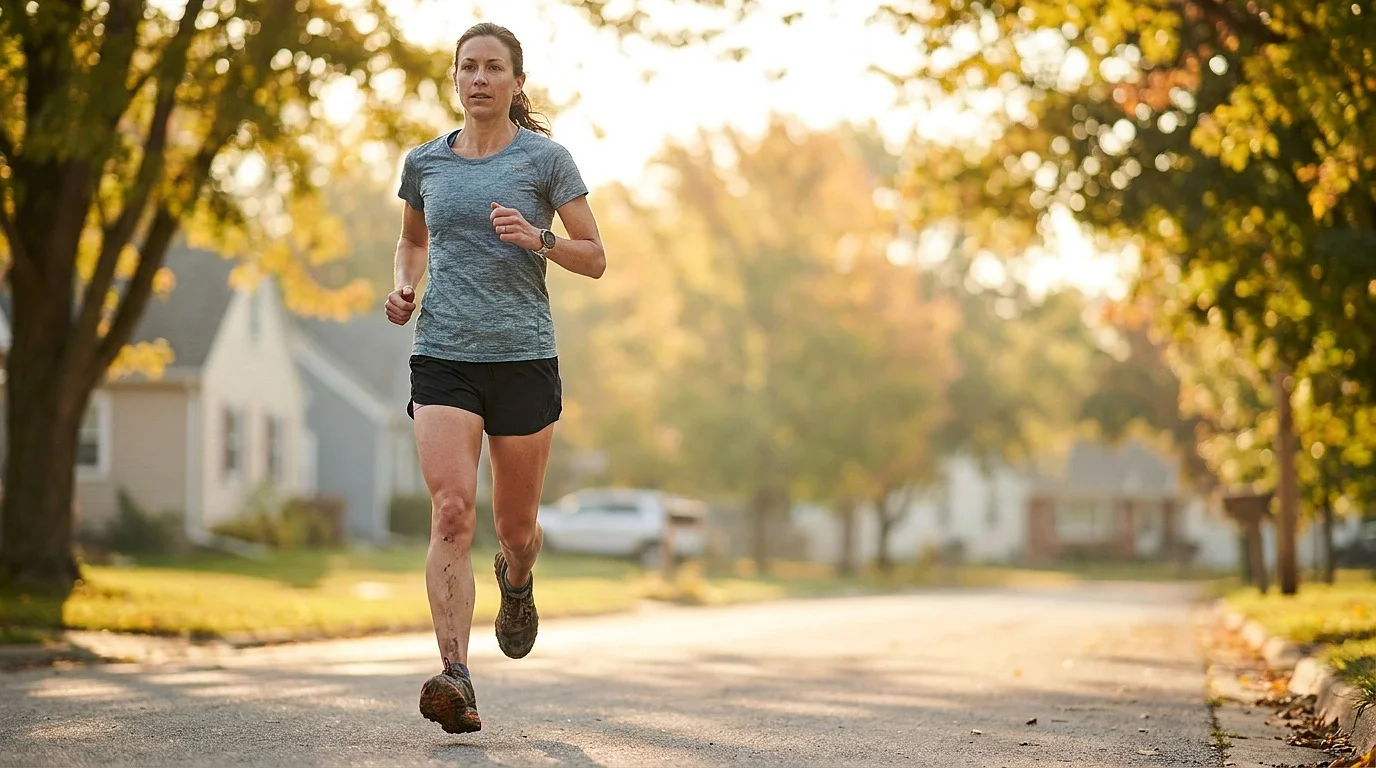
You added some miles to get ready for a race, or you started running to round out your lifting, and now the inside of your shin aches with every step. It shows up early in the run, sometimes sticks around after, and it's starting to make you nervous about your next session. That nagging ache is what most people call shin splints, and it responds really well to the right plan. The catch is that the most common plan, just stop and rest, tends to send you right back to square one. In this guide I'll break down what shin splints actually are, how to tell them apart from a couple of look-alikes, and the loading-based approach I use with runners and lifters here in Waukee to get you back to training.
What are shin splints?
Shin splints is the everyday name for medial tibial stress syndrome (MTSS). It's an overuse injury where the muscles, tendons, and bone lining along the inner edge of your shinbone get irritated from repetitive impact. The pain usually runs along the lower two-thirds of the inside of the tibia and feels diffuse, meaning it's spread out rather than coming from one tiny spot.
It's one of the most common lower-leg complaints in runners, and it shows up in anyone who ramps up impact quickly: new runners, people coming back from time off, and lifters who suddenly add a lot of conditioning. The pain is real, but it's a load tolerance problem, not a sign that something is permanently damaged. That distinction matters, because it changes the entire treatment plan.
Anterior vs. medial shin pain: is it actually shin splints?
Before you treat it, you want to know what you're dealing with. Classic shin splints (MTSS) sit on the inner, medial side of the shin. Pain on the front of the shin, running down toward the ankle, is often a different issue: tibialis anterior tendinopathy. The two get treated on similar principles, but knowing which one you have helps target the right tissue.
Medial shin splints (MTSS)Tibialis anterior tendinopathyWhere it hurtsInner edge of the shinbone, lower two-thirdsFront of the shin and ankle, along the tendonHow it feelsDiffuse ache, tender along the boneSharp, localized on the tendon; often worst at the start of a run, eases as you warm up, then returnsWhat's irritatedMuscle attachments and the bone liningThe tibialis anterior tendon itself
If the front of your shin is the problem, our Achilles tendon pain guide covers the same loading principles that apply to most tendon issues in the lower leg.
A few things are worth ruling out, and these are reasons to get checked sooner rather than later:
Sharp pain in one specific spot on the bone, especially if it hurts at night or at rest. This can point to a stress fracture.
A tight, aching, or numb feeling that builds the longer you exercise and eases when you stop. This can point to chronic exertional compartment syndrome.
Per the Brigham and Women's standard of care for tibial stress injuries, those red flags deserve a proper evaluation before you push through.
What causes shin splints in runners and lifters?
Shin splints almost always comes down to load outpacing capacity. You did more than your shins were ready for, and the tissue couldn't keep up. The usual drivers:
A spike in running volume or intensity (the classic too much, too soon)
A surface or footwear change
Lots of impact added quickly: jump rope, box jumps, sprint intervals, or a HYROX block stacked on top of your lifting
Mechanics that pile extra stress onto the lower leg
If you're primarily a lifter, you probably didn't get shin splints from squatting. You got it from the running and conditioning you bolted onto your training. That's the hybrid-athlete trap, and it's why our powerlifting rehab guide and HYROX prehab guide both hammer on managing conditioning load, not just barbell load.
Why rest alone won't fix shin splints
Here's the part that trips people up. Rest calms shin splints down. It doesn't build anything back. Take two weeks off and the pain fades, but your shins are no more resilient than the day you stopped. So you return to running, load them the same way, and the ache comes right back. That's the rest-and-reinjure loop, and it's the single most common reason shin splints drag on for months.
The fix is to rebuild the tibia's tolerance for impact through progressive loading. A case report in the physical therapy literature followed a runner through a graded loading program and saw meaningful improvement in pain and function over about six weeks, without prolonged rest. It's the same principle behind our sciatica loading approach: calm the tissue down, then load it back up on purpose so it can handle your sport.
How I treat shin splints: the load-it approach
When a runner or lifter comes in with shin splints, here's the general path I take. Every plan is individual, but the framework holds:
Find the load error first. I look at your training history and run a gait or movement assessment to see where the extra stress is coming from. You can't fix what you haven't measured.
Calm it down without shutting it down. We dial back the aggravating load instead of stopping everything, so you keep your fitness and your routine.
Rebuild capacity. Targeted strengthening for the calves, the tibialis anterior and posterior, and the hips, so your lower leg can absorb impact again.
Add hands-on relief when it helps. A 2024 randomized trial found dry needling to the calf gave athletes with shin splints short-term pain relief and better ankle motion. I use dry needling alongside loading, not instead of it. If you're curious how it works, our dry needling guide walks through it.
Progress back to running on a plan, not a hope.
How long do shin splints take to heal?
Most cases settle over a few weeks to a couple of months. How long depends on how long you've had it, how irritable it is, and most of all how well the load gets managed along the way. Catch it early and manage the load, and you're often training comfortably within a few weeks. Ignore it, rest fully, then jump back to full volume, and you can stretch it out for months.
For getting back to running, I use clear criteria instead of the calendar:
You can walk pain-free for 10 to 14 days, and the bone isn't tender to press for about a week.
Then you start walk-jog intervals (for example, walk nine minutes, jog one, and repeat), building gradually as long as pain stays low and settles by the next day.
That kind of criterion-based progression is the backbone of our return to sport process, and a recent scoping review on returning to running after tibial bone stress injuries supports this graded, symptom-guided approach.
When to see a physical therapist for shin splints
You don't need a referral to see us, and you don't need to wait until it's unbearable. It's worth getting evaluated if:
The ache has hung around more than a couple of weeks
It's getting worse, not better, with your current routine
You have any of the red flags above (sharp single-spot bone pain, night pain, or that tight, numb, builds-with-exercise feeling)
You want to keep training and need a plan that doesn't start with "stop running for six weeks"
At Fortitude & Freedom in Waukee, we work with runners, lifters, and hybrid athletes across the Des Moines area to fix shin pain while keeping you moving. We're a one-on-one clinic that accepts Blue Cross Blue Shield and TRICARE, with a cash option, so you get a full hour and a plan built around your sport.
The bottom line
Shin splints is a load tolerance problem, not a life sentence. Rest will quiet it, but loading is what fixes it, because your shins need to get stronger than the running you're asking them to do. Tell medial shin splints apart from anterior tendon pain, respect the red flags, and rebuild capacity on a plan. Do that and you get back to training without living on the couch. If your shins are holding you back, reach out through our contact page and let's build your plan. Let's get you back to what you love.
References
This article is for education and isn't medical advice. Shin pain can have more than one cause, so please get evaluated by a qualified healthcare provider before starting a new treatment or training plan. Individual results vary.