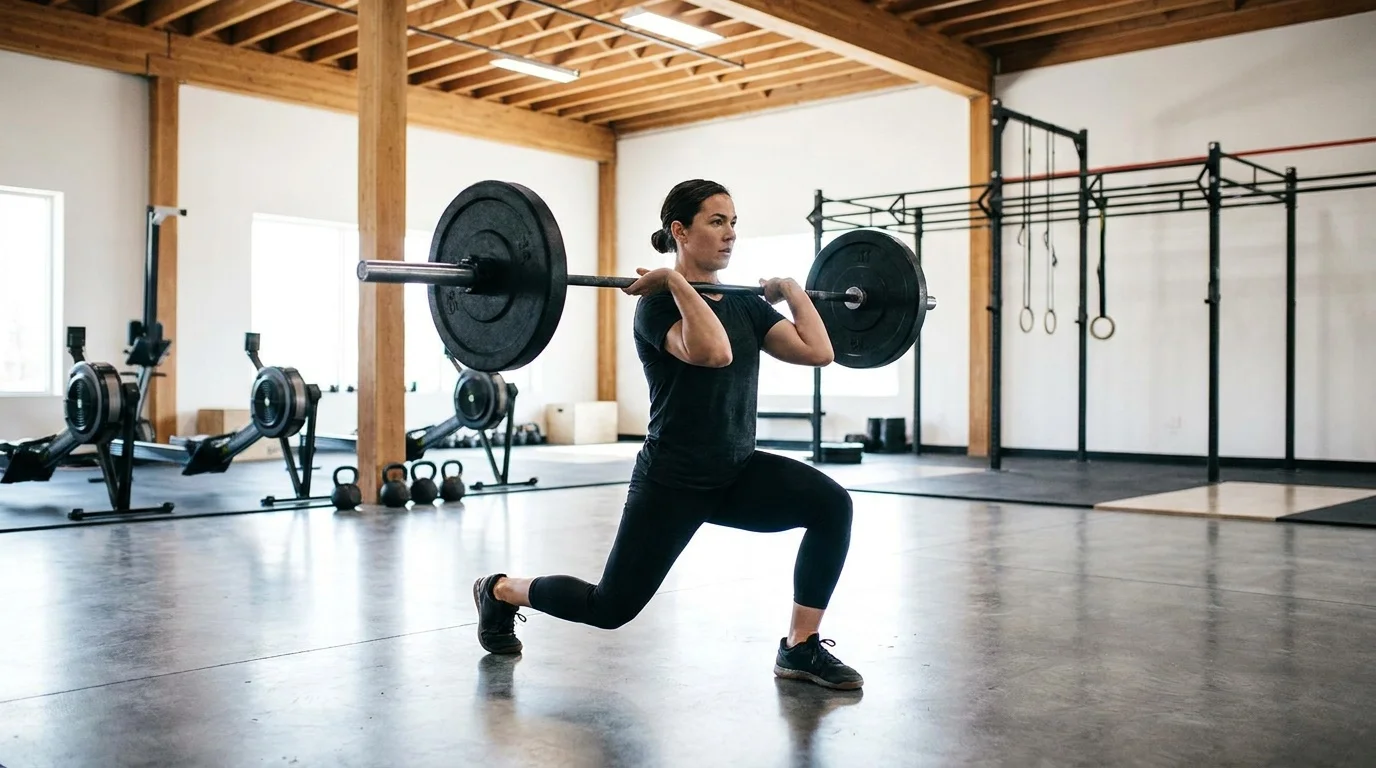
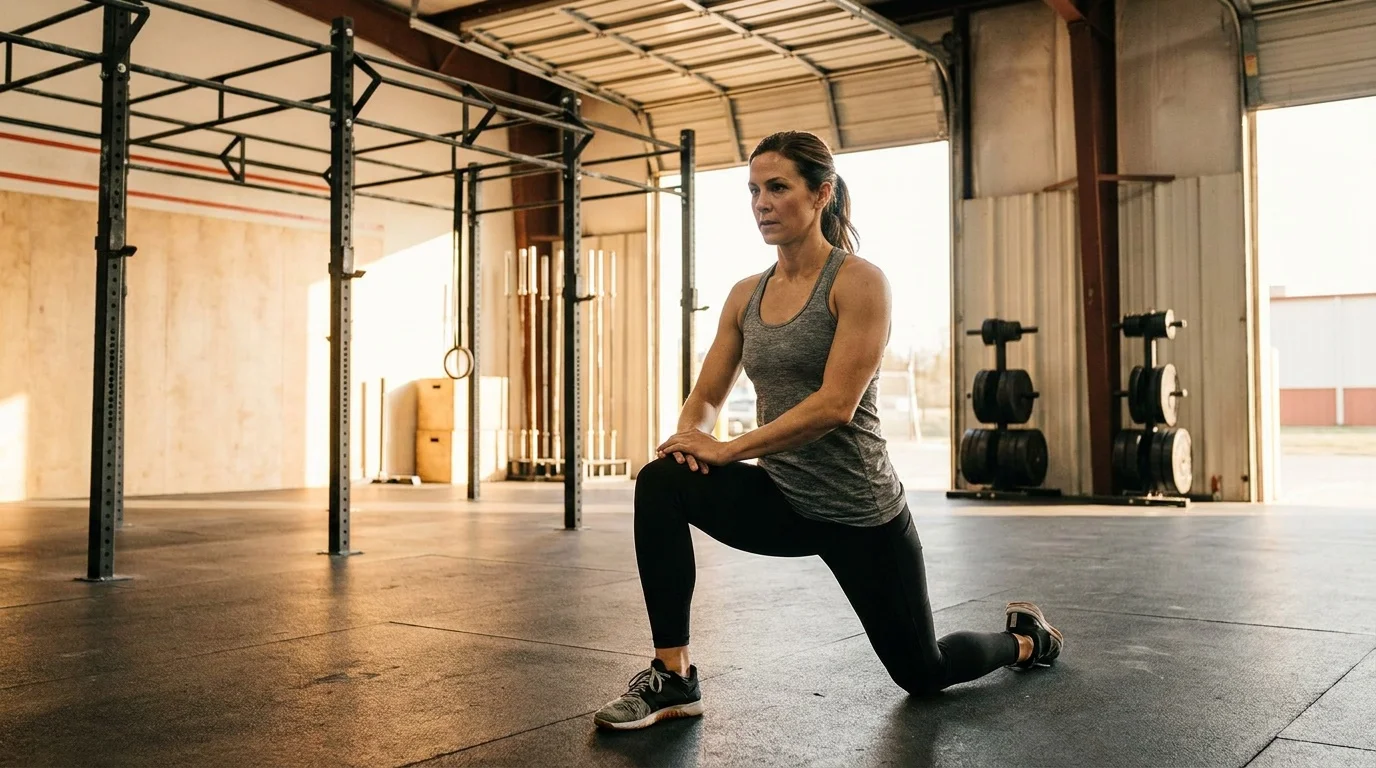
When you open an MRI report and see phrases like "lumbar spinal stenosis" or "multilevel degenerative disc disease," it is easy to think your lifting days are over or that surgery is the only way forward. If that is where you are, you deserve an honest answer about what rehab can actually do.
Let's look at what is happening in your spine, what the research says about physical therapy versus surgery, and how we get you back to training.
What Spinal Stenosis Actually Feels Like
Lumbar spinal stenosis simply means the spaces in your lower spine have narrowed, putting pressure on the nerves that travel down into your legs. It is very common, affecting an estimated 103 million people worldwide and about 11% of adults in the United States, becoming more common as we get older [1].
While an MRI or CT scan confirms the narrowing, stenosis is really defined by how it behaves when you move. The classic pattern is low back pain paired with leg pain, heaviness, cramping, or tingling that gets worse when you stand upright or walk (lumbar extension) and eases up when you sit down or lean forward (lumbar flexion) [1]. Many people notice they can lean on a shopping cart or ride a bike without much trouble, even when a flat walk around the block fires up their leg symptoms. If your leg pain behaves differently, it is also worth learning how we approach sciatica treatment by loading rather than resting.
Degenerative Disc Disease: Why the MRI Sounds Worse Than It Is
"Degenerative disc disease" is one of the most intimidating phrases in medicine, mostly because of the word "disease." In reality, it is a description of normal age-related changes on a scan, much like gray hair or wrinkles on the inside.
To see why we do not panic over a scan alone, look at a major review of 33 imaging studies that examined 3,110 people who had zero back pain [6]. The researchers found disc degeneration on the scans of 37% of 20-year-olds and 96% of 80-year-olds who had no pain at all [6]. Disc bulges showed up in 30% of pain-free 20-year-olds and 84% of pain-free 80-year-olds [6].
Those findings are normal parts of a human spine over time, and they have to be matched up with your actual symptoms during an exam [6]. Having disc changes on an image does not mean your back is fragile, and it does not mean you have to stop lifting. (If a disc bulge or herniation is also on your report, I wrote a separate breakdown on herniated discs and lifting.)
What Physical Therapy Can and Cannot Change
If you are considering physio for spinal stenosis or physical therapy for degenerative disc disease, you deserve a straight answer on the science.
First, what physical therapy cannot change: no stretch, manual therapy technique, or barbell exercise is going to scrape bone spurs away, widen the bony spinal canal on your next MRI, or re-inflate a thinned disc.
What physical therapy can change is how well your spine and hips move around that narrowing, how much load your trunk and legs can handle, how far you can walk, and how much pain you feel day to day. Most people with lumbar spinal stenosis are managed without surgery [1].
Here is what clinical trials show, including their limitations:
- Hands-on care plus individualized exercise beats generic approaches in the short term. In a randomized trial of 259 adults with lumbar spinal stenosis, patients who received manual therapy and individualized stretches and strength training from physical therapists or chiropractors improved their symptoms and physical function more at 2 months than those who got medical care or group exercise [2]. By 6 months, however, there was no difference between the groups [2]. A 2022 systematic review echoed this: there is moderate-quality evidence that manual therapy with exercise gives more short-term benefit than medical care or community group exercise, though most trials in this area are of low or very low quality overall [7].
- Supervised physical therapy beats a home exercise sheet alone. Another trial compared patients who did supervised physical therapy twice a week for 6 weeks (including manual therapy, tailored stretching and strengthening, cycling, and body-weight-supported treadmill walking) against patients who just did home exercises [3]. Even though both groups did their homework at the same rate, the supervised physical therapy group had better symptom severity, physical function, walking distance, leg pain, and daily step counts at 6 weeks [3].
- Better outcomes and fewer surgeries a year later. When researchers followed 86 of those patients for 1 year, 60.5% of the supervised physical therapy group reached a clinically meaningful improvement in their symptoms, compared to 32.6% of the home exercise group [4]. Only 7.0% of the supervised physical therapy group ended up having surgery at 1 year, compared to 23.3% of the home exercise group [4].
That gap between a handout of exercises and actual supervised progression is huge. It is why we do not just hand you a sheet of lower back stretches for pain and send you on your way. And because the 2-month gains in one trial were gone by 6 months [2], building long-term strength is part of how we work.
Physical Therapy, Injections, or Surgery?
About 600,000 surgeries for lumbar spinal stenosis are performed in the United States each year [1]. Selected patients whose pain and activity limits continue despite good conservative care may be candidates for decompression surgery [1].
What surprises many patients is how closely physical therapy and surgery compare when tested head-to-head. In a randomized trial of 169 people aged 50 and older with lumbar spinal stenosis who had already agreed to have surgery, half were assigned to decompression surgery and half to a physical therapy program [5]. At 2 years, physical function improved by a similar amount in both groups (22.4 points after surgery versus 19.2 points after physical therapy, not a statistically significant difference) [5]. Now, to be completely transparent about that study: 57% of the people in the physical therapy group eventually crossed over to have surgery during those two years [5]. Even when the researchers ran the numbers to account for that crossover, there was still no significant difference in physical function between the groups, and the authors called for shared decision-making with full disclosure of the evidence on both options [5].
What about epidural steroid injections? Both a 2022 JAMA review and a 2022 BMJ Open systematic review note that epidural steroid injections have not been shown to provide long-term benefit or effectiveness for lumbar spinal stenosis [1, 7].
If you are weighing your options and want to talk through what is on your scan, you can book a free discovery call with me before making any big decisions.
Red Flags: When to See a Doctor Right Away
Before starting any degenerative disc disease treatment or spinal stenosis exercises, certain symptoms require immediate medical evaluation. Consult a healthcare provider right away if you experience:
- Loss of bowel or bladder control
- Numbness in the groin, saddle area, or inner thighs
- Leg weakness that is getting progressively worse
How I Treat Stenosis and Disc Pain at Fortitude & Freedom
As a competitive lifter myself, I live the lifestyle I prescribe. When active adults come to see me for physical therapy for low back pain, my goal isn't just to get you back to "normal" or tell you to take it easy on the couch. Rest is not a plan. Our goal is to keep you in the gym and training throughout the rehab process while we work on the problem.
Every session happens one-on-one in a fully equipped gym in Waukee, working with barbells, platforms, and real conditioning equipment. You can read more about how I evaluate an athlete on day one, and in Iowa, no referral is needed to get started (see when you don't need a referral for orthopedic PT).
Whether you are looking for sports physical therapy or specialized powerlifting physical therapy, we move through four stages of recovery:
1. PAIN: Minimize Pain & Inflammation
First, we calm the irritated nerve roots and tissues down. We find the positions and movements that give your spine space (often slightly flexed or neutral postures) and use hands-on manual therapy to get symptoms settling. If you are lifting, we change your training rather than stopping it, adjusting or swapping the lifts that flare up your leg symptoms so your legs and back keep working.
2. PRIME: Restore Mobility, Flexibility, & Strength
Once the daily flare-ups quiet down, we restore mobility and flexibility, practice spinal stenosis exercises in positions that open up the lower back, and build hip and trunk strength so you can control your pelvis under load.
3. PERFORM: Return to Normal Function & Activity
Here we build capacity. We build up your walking tolerance and conditioning with cycling and walking, the same tools used in the supervised therapy trial [3], alongside progressive barbell and gym loading. We bring back your squats, deadlifts, running, or class workouts piece by piece so your spine and legs get stronger together.
4. PREVENT: Maintenance & Prevention of Injury
Because the short-term gains in one trial were gone by 6 months [2], the final stage is making sure you know how to manage your back for the long haul. You leave knowing the exact "why" behind your programming, how to keep your trunk and hips strong, and what adjustments to make at the very first sign of tightness so a minor tweak is less likely to turn into a setback.
Ready to Get Back to Training?
At Fortitude & Freedom Performance Therapy (1040 SE Frontier Ave, Suite 120, Waukee, IA), we work with active adults from Waukee, West Des Moines, Clive, Urbandale, Grimes, Johnston, Adel, and Des Moines. No physician referral is needed to start.
If you have an MRI showing spinal stenosis or degenerative disc disease and want a clear plan that keeps you active, book a free discovery call or reach out through our contact form if you prefer to write.
Disclaimer: This article is for general educational information only. It is not a medical diagnosis and does not replace an individualized examination by a licensed healthcare provider. Always consult a healthcare provider regarding your specific symptoms and medical care.
Sources
- Katz JN, Zimmerman ZE, Mass H, Makhni MC. Diagnosis and Management of Lumbar Spinal Stenosis: A Review. JAMA, 2022;327(17):1688-1699. https://doi.org/10.1001/jama.2022.5921
- Schneider MJ, Ammendolia C, Murphy DR, et al. Comparative Clinical Effectiveness of Nonsurgical Treatment Methods in Patients With Lumbar Spinal Stenosis: A Randomized Clinical Trial. JAMA Network Open, 2019;2(1):e186828. https://www.ncbi.nlm.nih.gov/pmc/articles/PMC6324321/
- Minetama M, Kawakami M, Teraguchi M, et al. Supervised physical therapy vs. home exercise for patients with lumbar spinal stenosis: a randomized controlled trial. The Spine Journal, 2019;19(8):1310-1318. https://pubmed.ncbi.nlm.nih.gov/30986577/
- Minetama M, Kawakami M, Teraguchi M, et al. Supervised physical therapy versus unsupervised exercise for patients with lumbar spinal stenosis: 1-year follow-up of a randomized controlled trial. Clinical Rehabilitation, 2021. https://search.pedro.org.au/search-results/record-detail/63678
- Delitto A, Piva SR, Moore CG, et al. Surgery versus nonsurgical treatment of lumbar spinal stenosis: a randomized trial. Annals of Internal Medicine, 2015;162(7):465-473. https://pubmed.ncbi.nlm.nih.gov/25844995/
- Brinjikji W, Luetmer PH, Comstock B, et al. Systematic literature review of imaging features of spinal degeneration in asymptomatic populations. American Journal of Neuroradiology, 2015;36(4):811-816. https://www.ajnr.org/content/36/4/811
- Ammendolia C, Hofkirchner C, Plener J, et al. Non-operative treatment for lumbar spinal stenosis with neurogenic claudication: an updated systematic review. BMJ Open, 2022;12(1):e057724. https://bmjopen.bmj.com/content/12/1/e057724